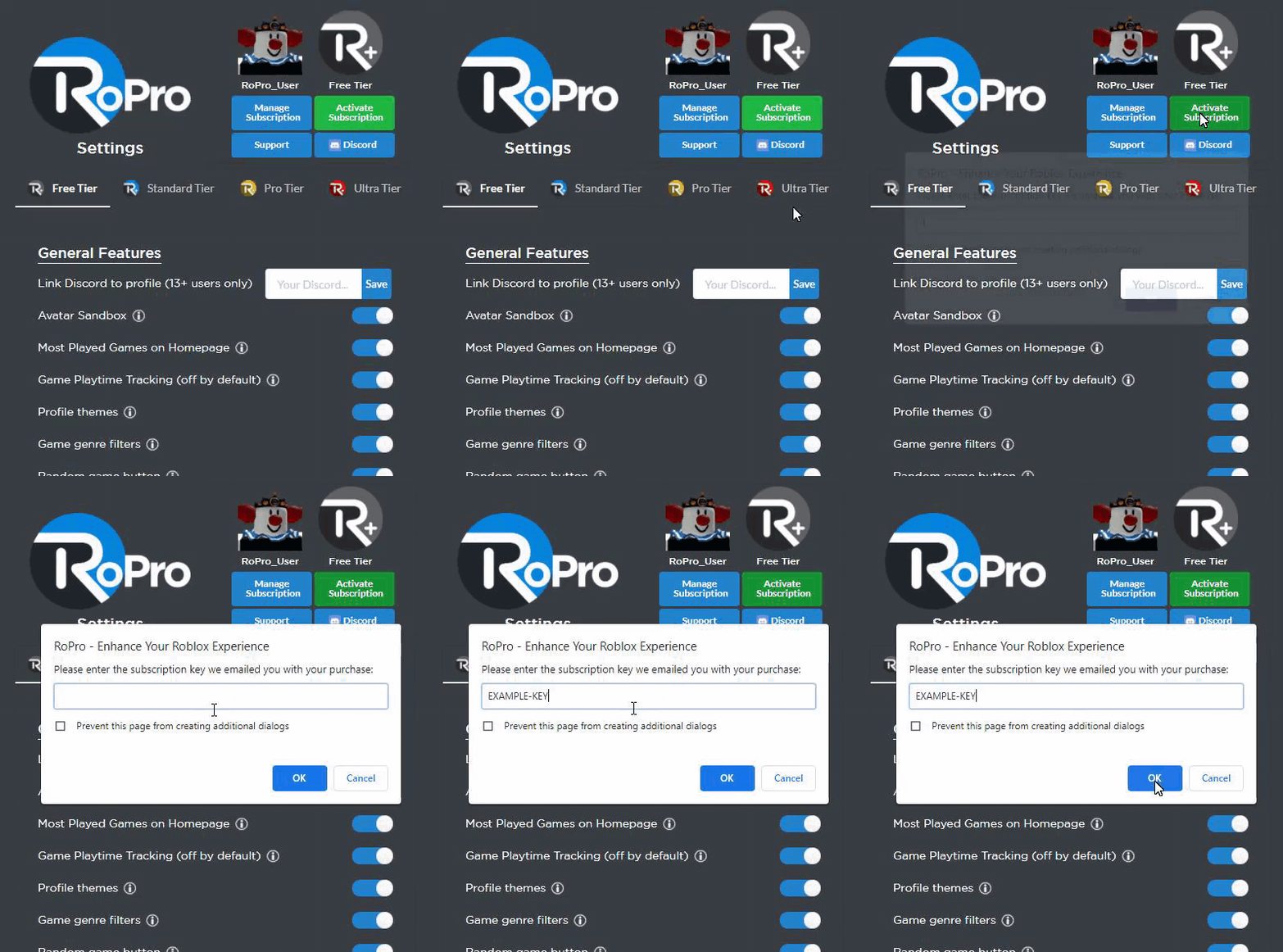
Activate your subscription in the RoPro Settings page by clicking the green "Activate Subscription" button and entering your key in the popup.
We also sent this key to the email you provided with your purchase.
If you have any issues with your subscription, please reach out to a staff member via our Discord Server.
Until then, if your binary is too fat, remember: It's not the codec's fault. You just compiled the reference implementation for the reference machine. Trim the flags, target your silicon, and libvpx will slim down.
--target=armv7-linux-gcc --disable-neon --disable-avx2 Do not use --enable-shared if you only need one binary. Use --enable-static and let the linker garbage-collect unused functions ( -ffunction-sections -Wl,--gc-sections ). libvpx has a little-known flag: bloat libvpx
If you are just decoding video (not encoding), consider dav1d for AV1 or ffmpeg with --enable-libvpx --disable-everything . But that is a story for another day. Until then, if your binary is too fat,
But in recent years, a quiet grumble has emerged from embedded systems engineers, Linux distribution maintainers, and build-from-source enthusiasts. That grumble has a name: What is "Bloat libvpx"? To the uninitiated, "bloat" might sound like an insult. In this context, it’s a technical observation. "Bloat libvpx" refers to the phenomenon where the standard compilation of the library produces a binary that is significantly larger, slower to compile, or more resource-hungry than necessary for a given use case. But that is a story for another day
We aren't talking about malware. We are talking about feature creep .