



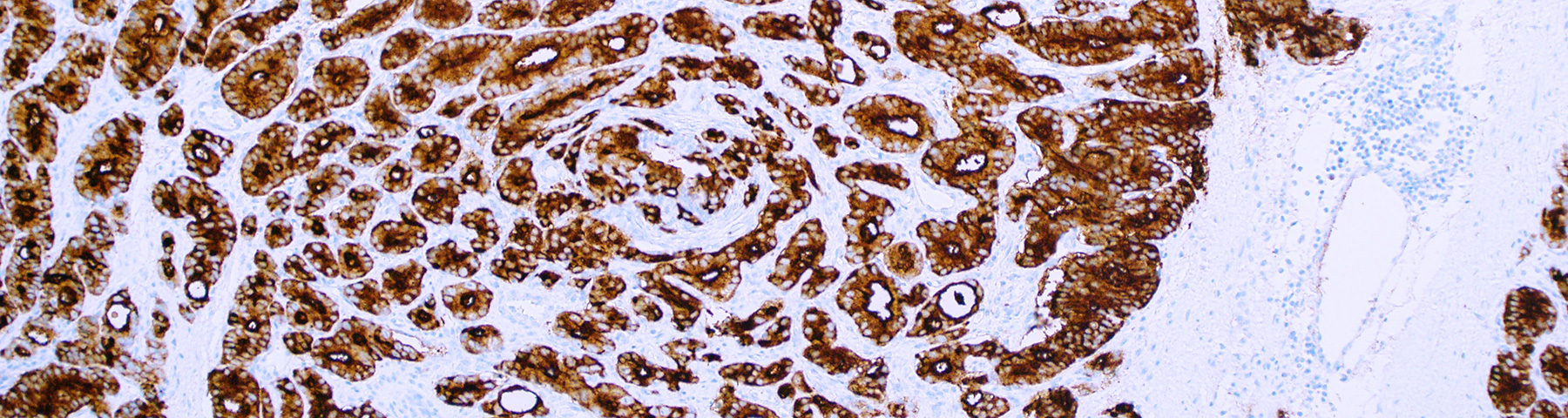
Troubleshooting tips that will assist you with successful IHC staining.
Telotte, J.P. The Mouse Machine: Disney and Technology . University of Illinois Press, 2008. (For analysis of science fiction in Disney live-action films.)
This portrayal resonates deeply with the experience of any child who feels out of step with their environment—whether due to intellectual giftedness, neurodivergence, or simply being the “new kid.” The film’s opening sequence, set in a grim orphanage, establishes a world of gray conformity. The children’s powers are not celebrated but hidden, suppressed by a society that fears what it cannot understand. The orphanage matron, Miss Grimes (Reta Shaw), represents this institutional hostility, labeling the children’s abilities as “weird” and “unnatural.” In this sense, Escape prefigures later narratives like X-Men (where mutation is a metaphor for minority status) and Harry Potter (where the muggle world suppresses magic). Tia and Tony’s journey is not about learning to use their powers, but about escaping a world that would either exploit or extinguish them.
Key, Alexander. Escape to Witch Mountain . Westminster Press, 1968. escape from witch mountain movie
Hough, John, director. Escape to Witch Mountain . Walt Disney Productions, 1975.
Brode, Douglas. From Walt to Woodstock: How Disney Created the Counterculture . University of Texas Press, 2004. (For context on Disney’s 1970s output.) Telotte, J
At its core, Escape to Witch Mountain is a story about being different. Tia and Tony are not merely orphans; they are orphans whose very biology marks them as outsiders. Their abilities—telepathy, telekinesis, astral projection, and weather control—are not presented as mere superpowers but as innate, almost involuntary extensions of their emotions. When frightened, Tony can inadvertently move objects; when distressed, Tia can see visions of their lost home planet.
Escape to Witch Mountain endures not because of its special effects (which are dated) or its action sequences (which are modest), but because of its emotional and philosophical core. It is a film that takes childhood seriously—that validates the feeling of being different and suggests that one’s strangest qualities might be clues to a greater destiny. In an era of increasing skepticism toward authority and rising interest in parapsychology, the film tapped into a cultural vein of longing for mystery and self-determination. Tia and Tony do not ask to be saved; they save themselves, with Jason as their ally, not their savior. As such, Escape to Witch Mountain remains a powerful touchstone for anyone who has ever looked at the stars and wondered if somewhere out there, there is a place where they truly belong. (For analysis of science fiction in Disney live-action films
The film’s title is deliberately paradoxical. “Escape to Witch Mountain” implies fleeing to a place of ostensible danger. In Western folklore, witches are figures to be feared. Yet for Tia and Tony, Witch Mountain is not a site of horror but of home—a landing site for their alien ship and a rendezvous point with their own kind, led by the benevolent Uncle Bene (Eddie Albert). This inversion transforms the narrative into a Gnostic allegory. The children are souls trapped in a hostile, material world (Earth), pursued by malevolent archons (Bolt and Letha), seeking to return to the pleroma (their home planet). Witch Mountain is the gateway.