Okinawa-kenpo is a karate style which has been developed based on ancient Okinawan martial arts called "Ti". Its technique and thought were studied and refined by a Tomari-te master, Shinkichi Kuniyoshi (also known as "BUSHI" Kuniyoshi) and passed down to Grand Master Shigeru Nakamura, the founder of Okinawa-kenpo. Grand Master Nakamura opened his own dojo "Okinawa-kenpo Karate-do Shurenjo" at Onaka, Nago city and taught his art of karate.
Written in Japanese.
Japanese fonts required to view this contents
"Okinawa-kenpo" was founded by Grand Master Shigeru Nakamura in 1960 as an association of diverse dojos based on his belief "there is no Ryuha in Okinawa karate".
Participation to a competition in Kyushu as "The All Japan karate-do Federation, Okinawa District" was how it all started. Nakamura felt how strong Japanese karate organization was at the competition and worried about the future of Okinawa karate.
Then, he appealed to all karate-ka in Okinawa for participating to the movement of "Okinawa-kenpo".
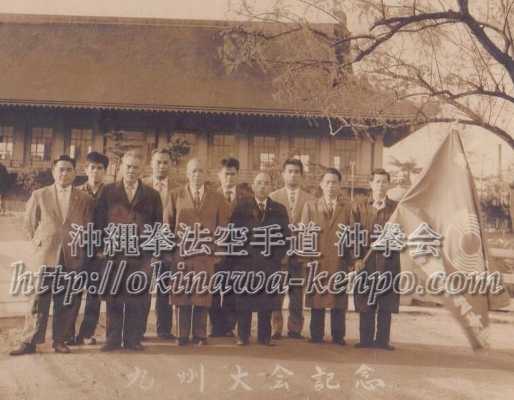
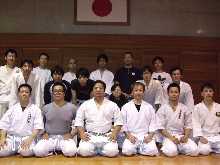
Upper row (left to right): 2nd from left, Komei Tsuha,Hiroshi Miyazato, Toshimitsu Kina
Bottom row (left to right): 2nd from left, Shigeru Nakamura, Shinsuke Kaneshima, Zenryo Shimabukuro
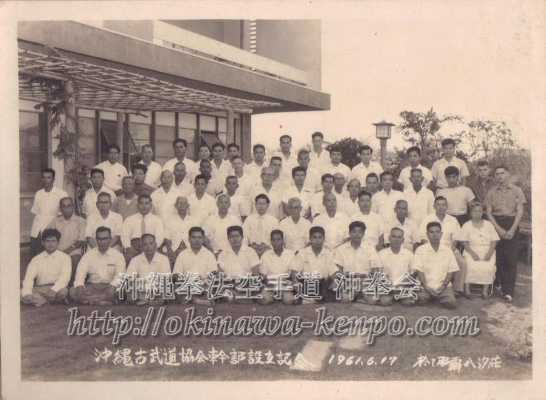
Upper row (left to right): (3rd from left) Kamaichi Nohara, Shinei Kaneshima, Tatsuo Shimabuku, (10th from left) Masami Chinen, Zenryo Shimabukuro
Middle row (left to right): (3rd from left) Shinei Kyan, Shosei Kina, Shinsuke Kaneshima, Seitoku Higa, (8th from left) Seiyu Nakasone, Kenko Nakaima
Bottom row (left to right): Hiroshi Miyazato, Komei Tsuha, (9th from left) Shigeru Nakamura, Joen Nakazato
In June 17, 1961, karate masters from all over Okinawa gathered at Yashio-so, Naha city. At this meeting, they had a discussion about the unification of Okinawa karate and finally came to endorse it (Establishing of Okinawa Kobudo Kyokai).
After Nakamura's passing, the group fell apart. However, Okinawa karate advanced to an era of great development.
Each karate style goes on its own way, and Okinawa-kenpo has become the name of the style which was taught and practiced by the students of Grand Master Nakamura.
Various Ryuha participated in the movement of "Okinawa-kenpo".
Mostly, they were from "The All Japan karate-do Federation, Okinawa District" and "Okinawa Kobudo Kyokai". Exchange of techniques was widely performed among them.
After the death of Nakamura, Okinawa-kenpo was divided into several groups.
Each group inherited Nakamura's will and techniques and developed Okinawa-kenpo in their own way.
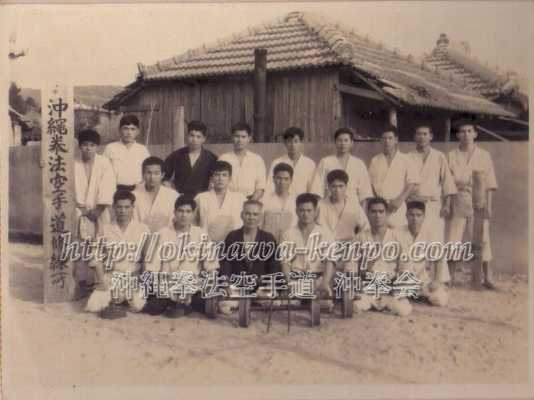
Bottom row, 3rd from left, Grand master Shigeru Nakamura, Shihan-dai Hiroshi Miyazatoo, Toshimitsu Kina
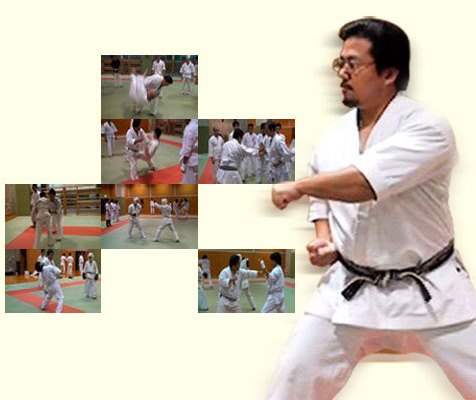
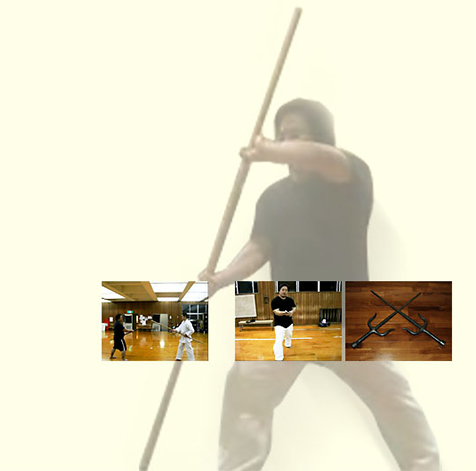
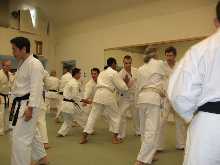
Old style karate techniques and training methods still remain in our system. We train with those methods, which are rarely seen in other Ryuha these days.
Tanren-hou (Training method)
Okinawa-sumo (traditional Okinawan wrestling)
Torite (grabbing)
Buki-jutsu (weapons)
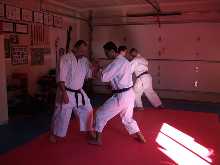
Our techniques, from empty hands to weapons,are incorporated in a coherent system and consist of common basic skills.
Historically, Okinawa-kenpo inherited various Kata.
The following is a list of kata which are practiced at Okinawa-kenpo Karate-do, Oki-ken-kai
Karate
Weapons
– Cash only, meet in a well-lit public place (police station lobbies work great), and never give anyone a verification code sent to your phone.
To give you the most helpful review, I will cover the most likely interpretation:
If you meant something else (e.g., the "Facebook Connect" developer tool), please clarify, and I’ll adjust. Facebook is a powerful tool for connection, but its popularity also makes it a prime hunting ground for scammers. Here’s a practical breakdown of the most common cons currently circulating on Facebook, along with actionable advice to stay safe. The Most Common Facebook Cons Right Now | Con Type | How It Works | Red Flags | |----------|--------------|------------| | Marketplace “Verification Code” Scam | A “buyer” asks for your phone number to send a verification code (actually a Google Voice or account recovery code). | Asking for code before seeing item. Pressure to act fast. | | Fake Giveaway / Lottery | “You won!” a prize from a brand you follow, but you must pay “shipping” or “fees” first. | Poor grammar, unofficial page, request for payment to claim a free prize. | | Romance Scam | Fake profile builds a relationship, then invents a crisis needing money (medical, travel, legal). | Refuses video calls, asks for gift cards or wire transfers. | | Malicious Quizzes | “What car are you?” Quizzes that ask for pet name, birth city, or mother’s maiden name (security answers). | Asks for info that overlaps with password recovery questions. | | Fake Customer Support | Scammers reply to public complaints on brand pages with a fake support number, then ask for login or payment info. | Unofficial profile, unsolicited DMs after a complaint. | What Actually Works (Helpful Advice) 1. Turn on two-factor authentication (2FA) – Use an authenticator app (Google Authenticator, Duo) not SMS when possible. This stops most account takeovers. facebook con
– Before engaging with a profile, right-click their photo and search Google Images. Romance and fake seller profiles often use stolen photos.
Stay skeptical, and Facebook remains a useful platform. Let your guard down, and you’re a target. If you actually wanted a review of a specific product or service called “Facebook Con” or “Facebook Connect,” please reply with the full name, and I’ll provide a focused review. – Cash only, meet in a well-lit public
– Before trusting a giveaway or ad, click the three dots on the page and select “Page Transparency.” New pages, pages run from other countries, or pages with name changes are high risk. What’s Overhyped vs. Real Risk Overhyped: “Facebook is listening to my microphone for ads.” (Studies consistently show this is false; ads come from your likes, clicks, and browsing history, not live audio.)
Account recovery cons. Scammers clone your profile, message your friends saying “I’m locked out, please send the code sent to your phone,” and take over friends’ accounts. Final Verdict Facebook itself is a neutral tool. The cons happen because of human trust and urgency, not technical flaws. If you follow one rule, make it this: Never give anyone a code sent to your phone, and never send money to someone you have not met in person. Here’s a practical breakdown of the most common
– That common “Can you help me? Facebook sent a code to YOUR phone” trick is designed to hijack your account.
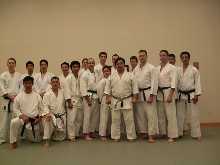
We, Okinawa-kenpo Karate-do Oki-Ken-Kai, work on in a unit called "Keiko-kai".
is a group of like-minded people to practice Okinawa-kenpo any time and anywhere.
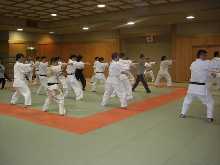
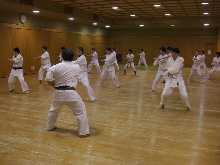
Today, there are Keiko-kai in eight region Japan;
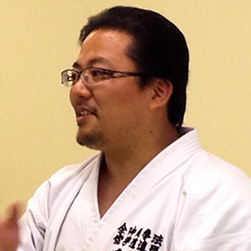
Shihan Yamashiro visits each Keiko-kai regularly, trains them, and conducts open seminars.


Shihan Yamashiro has been invited by masters of other styles, and conducted seminars regularly.


He started practicing karate when he was little with his father, Tatsuo Yamashiro, who inherited "Ti" from Hiroshi Miyazato.
He won 1st place at "All Okinawa Full Contact Fighting with Bogu Gear Tournament" in 1992 and 1993,
Written in Japanese.
Japanese fonts required to view this contents