| Email Address sales@sprintsmsservice.com |
Destination For Your Business Goal
| |
Before you begin any work, safety is paramount. Turn off the dishwasher at the control panel and, for absolute safety, unplug the unit or turn off the circuit breaker that supplies its power. You will also need a few household items: a towel or two for spills, a cup or small bowl, a flat-head screwdriver, a pair of pliers, a toothpick or small brush, and a cup of white vinegar and baking soda.
In conclusion, a non-draining dishwasher is a test of methodical troubleshooting, not a reason to call for expensive repair. By starting with the filter, then checking the hose and disposal, and finally inspecting the pump and air gap, you can solve the vast majority of clogs yourself. Regular maintenance—scraping plates, rinsing filters monthly, and running a cleaning cycle with dishwasher cleaner—will keep your machine draining freely. And if you reach the end of these steps with no success, you will have gathered enough information to confidently call a professional, knowing you have already ruled out the simple fixes. A clear drain leads not only to clean dishes but also to a quiet sense of household mastery. how to unclog a dishwasher drain
There is a unique frustration in opening your dishwasher after a full cycle, expecting the radiant warmth of clean dishes, only to be greeted by a tepid pool of murky, food-flecked water standing in the bottom of the machine. This unpleasant sight is the classic symptom of a clogged dishwasher drain. While it may seem like a major appliance failure, the problem is often simple, preventable, and solvable with a few basic tools and a bit of patience. Unclogging a dishwasher drain is a systematic process of elimination, starting with the easiest and most likely culprits before moving on to more complex causes. Before you begin any work, safety is paramount
First, disconnect the hose from the disposal or drainpipe. Place a towel and a bucket underneath, as water will spill. Using pliers to loosen the hose clamp, carefully pull off the hose. Next, locate the hose’s connection point at the dishwasher itself. This is usually behind the lower front kickplate, which you can remove with a screwdriver. Disconnect that end as well. Now, take the hose to your utility sink or outdoors. To clear it, you can try a few methods: run a stiff, long brush through it, blast it with a garden hose nozzle, or—most effectively—use a wet/dry vacuum sealed around one end to suck out any obstruction. You can also carefully thread a plumber’s snake through the hose. Once water runs freely through it, the hose is clear. Reattach both ends securely. In conclusion, a non-draining dishwasher is a test
Clearing a pump clog is more involved. You will need to access the pump at the bottom of the dishwasher. Remove the lower spray arm and the filter, then shine a flashlight down into the sump. You may see a broken piece of glass or a toothpick jammed in the pump impeller. Using needle-nose pliers, carefully extract the obstruction. If the pump is inaccessible, you can attempt a chemical-free cleaning by pouring a cup of baking soda followed by a cup of white vinegar directly into the standing water. The fizzing action can break up minor clogs. After 15 minutes, pour a pot of boiling water down the drain and let it sit for another 10 minutes before trying a rinse cycle.
If water still stands in your dishwasher, the problem is deeper, likely in the drain pump itself or an air gap. The air gap is a small, slotted cylinder mounted on your sink or countertop near the faucet. If it is clogged, unscrew its chrome cover, remove the plastic cap underneath, and clean out any debris with a toothpick or pipe cleaner.
If the filter was pristine or cleaning it didn’t help, the next suspect is the drain hose. This is a ribbed, flexible rubber or plastic tube that runs from the dishwasher to either the garbage disposal or a dedicated “wye” fitting in your sink’s drainpipe. Its low points can trap grease and debris over time.

Personalized Messaging
Flexible personalized messaging with editable fields for you to send SMS conviniently.

Language-Based Messaging
Create a customized message in your preferred language and send it in unicode.

Two-Factor Authentication
Secure your applications at scale by sending dynamic verification codes.

Scheduling & Group SMS
Strategically manage your marketing based on the preferences.

Global and Instant Delivery
Send your SMS all across the globe hassle-free and instantly.

Multiple Interface Options
Choose how to send a message using our SMS Panel, API or SMPP.
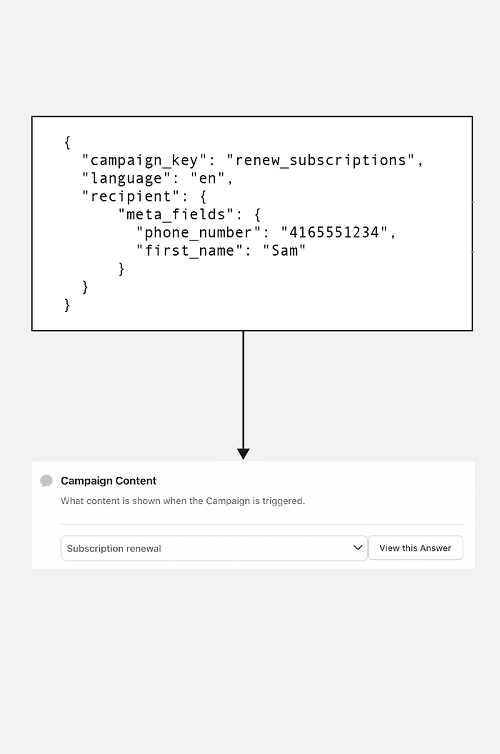
SMS API can be considered safe if proper security measures and protocols are implemented. Here are three pointers that show the safety features of SMS API:
Encryption
Encryption is one of the key security features of SMS API. It ensures that the data being transmitted between different software components is protected from unauthorized access, interception, or modification. APIs should use industry-standard encryption algorithms, such as SSL or TLS, to encrypt data in transit and protect sensitive information.
Authentication and authorization
SMS API should also implement strong authentication and authorization mechanisms to ensure that only authorized users and applications can access and use the API. This can be achieved through methods such as API keys, OAuth tokens, or multi-factor authentication, which help to verify the identity of the user or application and prevent unauthorized access.
Compliance and auditing
SMS API should comply with relevant industry standards, regulations, and best practices, such as PCI DSS, HIPAA, or GDPR, to ensure that the API is secure and compliant with data protection laws. Regular auditing and monitoring of the API usage can help identify potential security vulnerabilities or incidents and take appropriate actions to mitigate them.
Java SMS API
Java SMS API is a set of programming tools and libraries that developers can use to build SMS messaging applications in Java. Java SMS API supports various protocols such as SMPP, HTTP, and FTP, and is widely used in enterprise-level messaging applications.
Python SMS API
Python SMS API is a set of programming tools and libraries that developers can use to build SMS messaging applications in Python. Python SMS API supports various protocols such as SMPP, HTTP, and FTP, and is popular for its ease of use and readability.
PHP SMS API
PHP SMS API is a set of programming tools and libraries that developers can use to build SMS messaging applications in PHP. PHP SMS API supports various protocols such as SMPP, HTTP, and FTP, and is widely used in web development.
Ruby SMS API
Ruby SMS API is a set of programming tools and libraries that developers can use to build SMS messaging applications in Ruby. Ruby SMS API supports various protocols such as SMPP, HTTP, and FTP, and is popular for its simplicity and expressiveness.
.NET SMS API
.NET SMS API is a set of programming tools and libraries that developers can use to build SMS messaging applications in .NET languages such as C# and Visual Basic. .NET SMS API supports various protocols such as SMPP, HTTP, and FTP.
Node.js SMS API
Node.js SMS API is a set of programming tools and libraries that developers can use to build SMS messaging applications in Node.js, a popular JavaScript runtime. Node.js SMS API supports various protocols and is known for its speed and scalability.
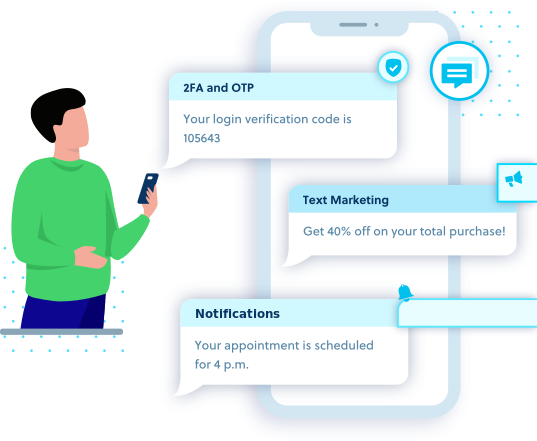
SMS APIs are commonly used by businesses and organizations for a variety of purposes. One popular use case is marketing and promotions, where SMS messages are used to send marketing campaigns, special offers, and event reminders to customers. Another use case is authentication and security, where SMS messages are used for two-factor authentication to help prevent unauthorized access and reduce the risk of fraud. Finally, SMS APIs are also used for notifications and alerts, such as appointment reminders, payment confirmations, and delivery notifications, to improve communication and enhance the overall customer experience.
Marketing and promotions
SMS APIs are commonly used by businesses to send promotional messages to their customers. This can include marketing campaigns, special offers, and reminders about upcoming events or promotions. It is a boon in disguise for small and medium enterprise.
Authentication and security
SMS APIs can be used for two-factor authentication, which adds an extra layer of security to the login process by requiring users to enter a code that is sent to their mobile phone via SMS. This can help prevent unauthorized access and reduce the risk of fraud.
Notifications and alerts
SMS APIs can be used to send notifications and alerts to customers or employees, such as appointment reminders, payment confirmations, or delivery notifications. This can help improve communication and reduce the risk of missed appointments or deadlines.
SMS APIs are difficult to integrate with existing systems. In reality, most SMS APIs are designed to be easy to integrate with existing systems, and many providers offer extensive documentation and support to help developers get started.
SMS APIs are only for large organizations. While SMS APIs are certainly useful for large organizations with a large customer base, they can also be beneficial for smaller businesses or organizations that need to communicate with customers or employees quickly and reliably.
SMS APIs are expensive. While some SMS API providers may charge high fees, there are many providers that offer affordable pricing plans and flexible payment options, making SMS APIs accessible to businesses and organizations of all sizes.
SMS APIs are not secure. In reality, most SMS APIs use encryption and other security measures to ensure the confidentiality and integrity of messages sent over the API. Additionally, many SMS API providers offer additional security features such as two-factor authentication to further enhance security.