Каталог товаров
- Пн - Вс с 9:00 - 17:00
-
Ваш город: Ростов-на-ДонуВыбрать регионЗакрытьПоискТаганрогАзовШахтыВолгодонскНовочеркасскБатайскНовошахтинскВаш город Ростов-на-Дону?
- Вход
- Регистрация
Лакокрасочные материалы и инструменты
+7 (918) 851-53-00Заказать звонок
Сообщение отправлено
Ваше сообщение успешно отправлено. В ближайшее время с Вами свяжется наш специалист
Закрыть окно
Каталог товаров






Space Simulation Toolkit Page
KSP uses a simplified "patched conic approximation" (sphere of influence model), whereas professional toolkits use numerical integration of high-order gravity fields. However, the principle is identical: thrust prograde to raise your orbit. Because of KSP, a new generation of aerospace engineers enters university already knowing what a Hohmann transfer is. Consider the James Webb Space Telescope (JWST). It sits at Lagrange Point 2 (L2), a location 1.5 million kilometers from Earth. We cannot send a repair crew. Before launch, engineers ran millions of hours of simulation using custom toolkits to model everything from the unfolding of the sunshield to the thermal contraction of the mirrors in shadow.
For decades, humanity’s reach for the stars was limited by two harsh realities: the crippling cost of failure and the absolute impossibility of a physical test run. You cannot build a satellite, launch it, and hope for the best. If your orbital insertion burn fails in reality, millions of dollars and years of work simply vanish into the atmosphere. space simulation toolkit
Simulation toolkits allow for —running the same mission 10,000 times with random errors introduced (sensor noise, thruster misfires, wind gusts during launch) to see if the system survives. If your simulation toolkit says you have a 99.999% success rate, you launch. If it says 98%, you go back to the drawing board. The Future: Real-Time and AI-Driven The next generation of space simulation toolkits is moving toward Digital Twins . A digital twin is a live simulation that mirrors an actual asset in orbit. If a real satellite experiences a temperature spike, its digital twin on the ground simulates the anomaly instantly, predicts the outcome, and suggests a mitigation strategy before the hardware fails. KSP uses a simplified "patched conic approximation" (sphere
Whether you are a student using GMAT to plot a course to Mars, or an engineer at Lockheed Martin stress-testing a reaction wheel, remember: In the simulation, you are allowed to crash. In reality, you are not. That is why we have toolkits. Consider the James Webb Space Telescope (JWST)
Enter the . In the modern aerospace era, these software ecosystems are the silent scaffolding upon which all successful missions are built. They are the digital proving grounds where physics, mathematics, and engineering converge to tame the void. What is a Space Simulation Toolkit? At its core, a space simulation toolkit is a collection of software libraries, algorithms, and visualization engines designed to model the behavior of vehicles and objects in a space environment. Unlike a simple video game mod, these toolkits are built on high-fidelity physics models.
Furthermore, AI agents are now being trained inside these simulators. Reinforcement learning allows a satellite to learn how to avoid collisions with debris in real-time, or how to reconfigure a constellation's power grid autonomously. A space simulation toolkit is more than software; it is a time machine. It allows us to see the consequences of our actions months or years before we press the "ignite" button. As we enter the era of lunar bases, asteroid mining, and orbital manufacturing, these toolkits will become the operating systems of the solar economy.


KSP uses a simplified "patched conic approximation" (sphere of influence model), whereas professional toolkits use numerical integration of high-order gravity fields. However, the principle is identical: thrust prograde to raise your orbit. Because of KSP, a new generation of aerospace engineers enters university already knowing what a Hohmann transfer is. Consider the James Webb Space Telescope (JWST). It sits at Lagrange Point 2 (L2), a location 1.5 million kilometers from Earth. We cannot send a repair crew. Before launch, engineers ran millions of hours of simulation using custom toolkits to model everything from the unfolding of the sunshield to the thermal contraction of the mirrors in shadow.
For decades, humanity’s reach for the stars was limited by two harsh realities: the crippling cost of failure and the absolute impossibility of a physical test run. You cannot build a satellite, launch it, and hope for the best. If your orbital insertion burn fails in reality, millions of dollars and years of work simply vanish into the atmosphere.
Simulation toolkits allow for —running the same mission 10,000 times with random errors introduced (sensor noise, thruster misfires, wind gusts during launch) to see if the system survives. If your simulation toolkit says you have a 99.999% success rate, you launch. If it says 98%, you go back to the drawing board. The Future: Real-Time and AI-Driven The next generation of space simulation toolkits is moving toward Digital Twins . A digital twin is a live simulation that mirrors an actual asset in orbit. If a real satellite experiences a temperature spike, its digital twin on the ground simulates the anomaly instantly, predicts the outcome, and suggests a mitigation strategy before the hardware fails.
Whether you are a student using GMAT to plot a course to Mars, or an engineer at Lockheed Martin stress-testing a reaction wheel, remember: In the simulation, you are allowed to crash. In reality, you are not. That is why we have toolkits.
Enter the . In the modern aerospace era, these software ecosystems are the silent scaffolding upon which all successful missions are built. They are the digital proving grounds where physics, mathematics, and engineering converge to tame the void. What is a Space Simulation Toolkit? At its core, a space simulation toolkit is a collection of software libraries, algorithms, and visualization engines designed to model the behavior of vehicles and objects in a space environment. Unlike a simple video game mod, these toolkits are built on high-fidelity physics models.
Furthermore, AI agents are now being trained inside these simulators. Reinforcement learning allows a satellite to learn how to avoid collisions with debris in real-time, or how to reconfigure a constellation's power grid autonomously. A space simulation toolkit is more than software; it is a time machine. It allows us to see the consequences of our actions months or years before we press the "ignite" button. As we enter the era of lunar bases, asteroid mining, and orbital manufacturing, these toolkits will become the operating systems of the solar economy.
 В корзину
 Купить в 1 клик
 Нашли дешевле
 Рассчитать доставку
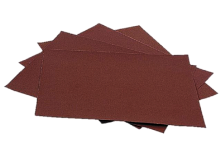
Наждачка SIA по мокрому №320
Сообщение отправлено
Ваше сообщение успешно отправлено. В ближайшее время с Вами свяжется наш специалист
Закрыть окно

Интернет-магазин профессиональных материалов для кузовного ремонта и ухода за автомобилем г. Ростов-на-Дону ул. Панфиловцев, 11, г. Ростов-на-Дону ул. Белорусская 106, г. Азов ул. Кооперативная 10а, г. Таганрог ул. Сызранова 4. Посмотреть на карте |