Furthermore, the episode serves as a vital piece of character architecture for Sheldon. Viewers of The Big Bang Theory know the adult Sheldon as emotionally stunted and often oblivious to others’ needs. "A Virus, a School Vacation, and the Mother of All Colds" provides a retroactive explanation: he was raised by a mother who made sacrifice look effortless. By never seeing her struggle openly, he never learned to recognize it. The episode does not villainize Sheldon; it humanizes Mary. Her invisible labor becomes the very reason Sheldon can afford to be a genius. She absorbs the world’s chaos so he can live in his mind.
The episode’s brilliance lies in its central, ironic reversal: Sheldon, the germaphobe who lives in terror of biological chaos, becomes the vector of that very chaos. When a virus sweeps through the Cooper household, Sheldon is bedridden, not with dramatic flair, but with a childlike helplessness that strips away his intellectual armor. Simultaneously, Mary falls victim to the same illness. On paper, this should be a crisis—the family’s primary caretaker is incapacitated. Yet, Mary refuses to surrender to her fever. She drags herself from room to room, delivering soup, checking temperatures, and offering comfort, all while her own body aches for rest.
This dynamic is sharpened by the subplot involving George Sr. and Missy. While George fumbles with basic domestic tasks and Missy revels in the school vacation chaos, Mary remains the silent anchor. She does not ask for help because, as the episode suggests, she has internalized the belief that asking for help is a failure of her role. The humor—George burning toast, Missy exploiting the lack of supervision—is undercut by a poignant realism. Mary’s sacrifice is not heroic in a cinematic sense; it is mundane, repetitive, and utterly essential. She is the operating system of the Cooper household, and even a virus cannot force a reboot.
The episode’s title, "the Mother of All Colds," is a deliberate double entendre. It refers not only to the severity of the virus but to the quintessential mother who must persevere through it. Director Alex Reid and writer Steven Molaro craft a quiet masterclass in visual storytelling: we see Mary leaning against doorframes for support, her movements sluggish, her voice hoarse, yet her hands never stop working. In contrast, Sheldon, even while sick, cannot resist correcting his mother’s medical terminology or critiquing the efficiency of her chicken soup delivery. He is a receiver, not a giver. The episode subtly asks a profound question: In a family that revolves around Sheldon’s genius, who revolves around Mary?
.png)



 eRTK10 mini
 eRTK20
 eRTK25
 eRTK30
 eRTK60
 eBase 20
 E200
E200 E300 Pro
 E500
E500 E800
E800 E600
E600 eDMR1
eDMR1 NET10
NET10 NET20 PLUS
 eHP10
eHP10 P8III
P8III P9IV
P9IV UT32
UT32 Surpad4.2
 GEOSolution
 GNSS.NET
 eScan M1
 eHLS2
eHLS2 eME10
eME10 eME30
eME30 eMP10
eMP10 eMG30
eMG30 eMR10
eMR10 eMB10
eMB10 eMC10
eMC10 EAS502
 Bestar 301
  EAS301 Pro Motor
 EAS301 Pro Hydraulic
 EAS100
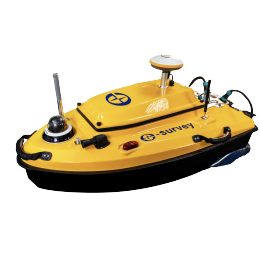 VE115
VE115 VE158
VE158 eTS32
eTS32 E3
E3 eTS2
eTS2 eTS8
eTS8 ESL2
ESL2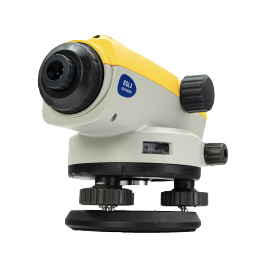 ESL3
ESL3 ET2A
ET2A TRU35
TRU35 UA91
UA91 UA92
UA92 UA35
UA35